

How To's
Written by
BookYolo Team




Are you tired of reading hotel reviews online and not knowing which ones to trust? Studies show that fake hotel reviews are rising each year on booking websites. This guide will help you spot fake or promotional online reviews before your next travel or hotel booking.
Read on to learn simple ways to protect yourself from false guest feedback.
Why Fake Hotel Reviews Are a Problem?
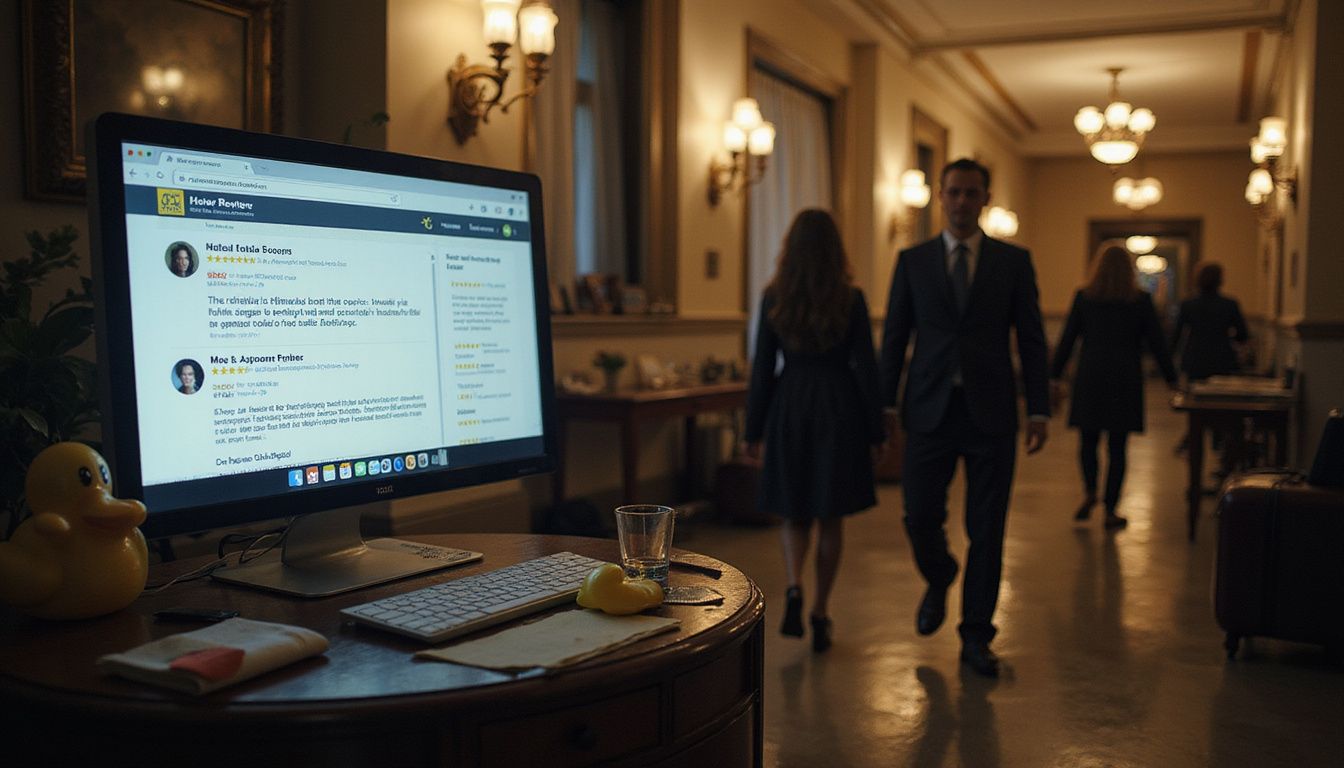
Fake reviews hurt both guests and hotel owners. A misleading review can make a bad property look great or a good one seem awful. This makes booking decisions risky for everyone involved.
In 2023, Tripadvisor reported that it removed over 1 million fake hotel reviews and flagged thousands of suspicious accounts to protect users. Many hoteliers now struggle with online reputation management because negative or positive fake reviews bury real guest feedback.
Competitors sometimes fabricate bad content to harm rival hotels, while some properties pay for positive reviews to boost their ratings unfairly. These trends confuse travelers who rely on trustworthy guest reviews before booking a room.
About 4% of all hotel reviews posted online are estimated to be fake, says ReviewTrackers.
Spotting key characteristics in these suspicious posts helps every hotelier identify red flags before they mislead more people. Next comes understanding the common signs seen in most promotional or fake hotel reviews.
Common Characteristics of Fake or Promotional Reviews
Fake or promotional reviews often sound too good to be true. They usually lack real details about the stay and rely on over-the-top praise.
Overuse of generic praise and superlatives
Many reviews come with phrases like “amazing stay,” “fantastic service,” or “best hotel ever.” These words sound nice but mean little without facts. Overuse of superlatives and generic praise often signals a promotional review.
During my last trip, I saw several five-star reviews on a popular review platform that repeated the same glowing words for different hotels. None mentioned real experiences or staff names.
Fraud detection tools and analytics software help monitor these fake patterns by spotting too much positive language that lacks details. Hotels may hire third-party companies to write positive reviews using generic statements.
Safeguard your choice by scanning for detailed feedback instead of just high ratings and empty compliments. Sites use this approach to prevent misleading information and respond quickly to suspicious reviews, helping travelers make better decisions.
Lack of specific details about the stay
Fake hotel reviews often use too much generic praise. The next red flag is a lack of specific details about the stay. Real travelers mention things like the room number, how clean the bathroom was, or names of staff members who helped them.
Fake reviewers skip these facts and just write, “Great hotel!” or “Amazing service!” without sharing more.
“Specific stories show real experiences,” says review expert Mark Peters.
Vague reviews make it hard to tell if the reviewer actually stayed there. Honest reviews talk about Wi-Fi speed, breakfast options, check-in time, or noise levels at night. Reviews with only broad statements do not help you verify if they are true on big review platforms.
Always look for detailed information to factor into your decision before booking a hotel stay.
Suspicious timing of multiple reviews
Sometimes, many reviews appear at once. This can raise questions about their authenticity. If several five-star ratings show up on the same day, it may seem odd. These reviews could be fake or promotional.
For example, a hotel might encourage guests to write a review right after check-in; this is often seen before a big event or sale. Observing these patterns helps flag suspicious activity.
Negative reviews can also emerge quickly as part of a legal tactic against competition. Checking the timing of multiple reviews can reveal hidden motives and help you spot false feedback more easily.
Reviewer Profile Red Flags
4. Reviewer Profile Red Flags: Watch for strange patterns in user profiles. Accounts with only one review raise suspicion. Profiles that lack details feel less trustworthy. Also, beware of users who always give 1-star or 5-star ratings without much thought.
These signs can help you spot fake reviewers easily. Want to learn more about identifying genuine feedback? Keep reading!
Single-review accounts
Single-review accounts raise red flags. These reviewers have only posted one review on a site. They often create fake reviews to promote hotels or mislead potential guests. A single review can seem biased, especially if it reads like an advertisement.
These accounts sometimes use generic language and lack personal details about the stay. Their ratings might be extreme, either very low or very high without much explanation. Such patterns suggest these reviewers may not be real guests but are instead pushing a hidden agenda.
You should view these reviews with caution to avoid being swayed by misleading information.
Generic or incomplete profiles
Single-review accounts often come with generic or incomplete profiles. These profiles lack detail about the reviewer. They may have no picture, a vague username, or little information.
This makes it hard to trust their reviews.
Many fake reviews come from these profiles. A user with just one review might not be real. Their rating can seem biased, either too high or too low. Without details and background, it is tough to take their opinions seriously.
Companies sometimes create these fake profiles for promotional reasons; this can affect honest business reputations and lead to defamatory outcomes for real hotels striving for genuine feedback.
Consistent extreme ratings (all 1-star or all 5-star)
Consistent extreme ratings raise red flags for hotel reviews. If you see many 1-star or 5-star ratings, they might not be real. Genuine guests often give mixed reviews. They share both good and bad experiences.
Fake reviews usually show strong emotions but lack detail.
Reviewer profiles matter too. New accounts giving only extreme ratings may be fake. These profiles often lack history or other activity. This pattern indicates that these reviewers may have a hidden agenda, like promoting or damaging a hotel’s reputation.
Next, take note of the reviewer profile red flags to help spot more suspicious behavior in hotel reviews.
How to Detect and Verify Authentic Reviews
To spot real hotel reviews, check for detailed comments that share both good and bad points. Compare what people say on different sites to see if the stories match up.
Look for balanced, detailed reviews
Balanced reviews give a clear picture of the hotel experience. These reviews show both good and bad points. They often include specific details, like room size or cleanliness. A guest might say, "The bed was comfy but the bathroom needed cleaning." Such comments help identify real opinions.
Fake reviews usually lack these specifics. They may just praise everything without explaining why. For instance, one could read, "This place is amazing!" but not see any facts to back it up.
Proactive travelers should pay attention to those detailed stories that come from real guests' experiences in the hotel.
Compare reviews across multiple platforms
Check reviews on different sites. A hotel may have great scores on one platform but low ratings on another. This can show a pattern of fake or promotional reviews.
Look for trends in comments across websites, like TripAdvisor, Google, or Yelp. Genuine guests often share similar experiences and details about their stay. Direct experience adds credibility to what they say.
If many reviewers mention the same issue or positive feature, that’s a strong sign of truth in the reviews you see.
Use review analysis tools
Comparing reviews across multiple platforms helps spot fake ones. Using review analysis tools, such as BookYolo, can make this task easier. Tools analyze patterns in reviews and flag suspicious ones.
They can help you find excessively positive or negative comments.
Some tools show the average ratings from different sites. This way, you get a clearer picture of what to expect. Experience shows that users who rely on these tools often feel more confident in their choices.
With the right tool, spotting fake hotel reviews becomes simpler and faster.
Conclusion - Detecting Fake Or Promotional Hotels Reviews
Fake hotel reviews can mislead travelers. They make it hard to choose the right place. Spotting these fakes is key for a great stay. Look for detailed, balanced thoughts in reviews.
Trust your instincts and check multiple sources before booking. Stay smart and enjoy your travels!
Back
