
Destinations Guides
Written by
BookYolo Team




Choosing between Vienna and Prague can feel like picking your favorite child. Both cities offer stunning architecture, rich military history, and vibrant cafe culture that attracts millions of visitors each year.
This guide breaks down the key differences in food, sightseeing, costs, and accommodations to help you make the right choice for your city break. Ready to discover which Central European gem deserves your next vacation?
Key Takeaways
Prague offers better value with hotels costing 30% less than Vienna and restaurant meals averaging $15-20 versus Vienna's $25-35 per person.
Vienna excels in imperial architecture and world-class museums like Belvedere Palace, while Prague charms with medieval Gothic spires and fairy-tale castle complexes.
Vienna's refined coffeehouse culture contrasts sharply with Prague's vibrant beer hall scene, where Czech beer costs less than coffee in many establishments.
Both cities face tourist trap issues, but Prague's Old Town accommodations often charge premium prices for subpar rooms compared to Vienna's higher hospitality standards.
Transportation costs favor Prague at half Vienna's $8 daily pass price, while cultural activities like concerts cost $20 in Prague versus $50-100 in Vienna.
Cultural Experiences
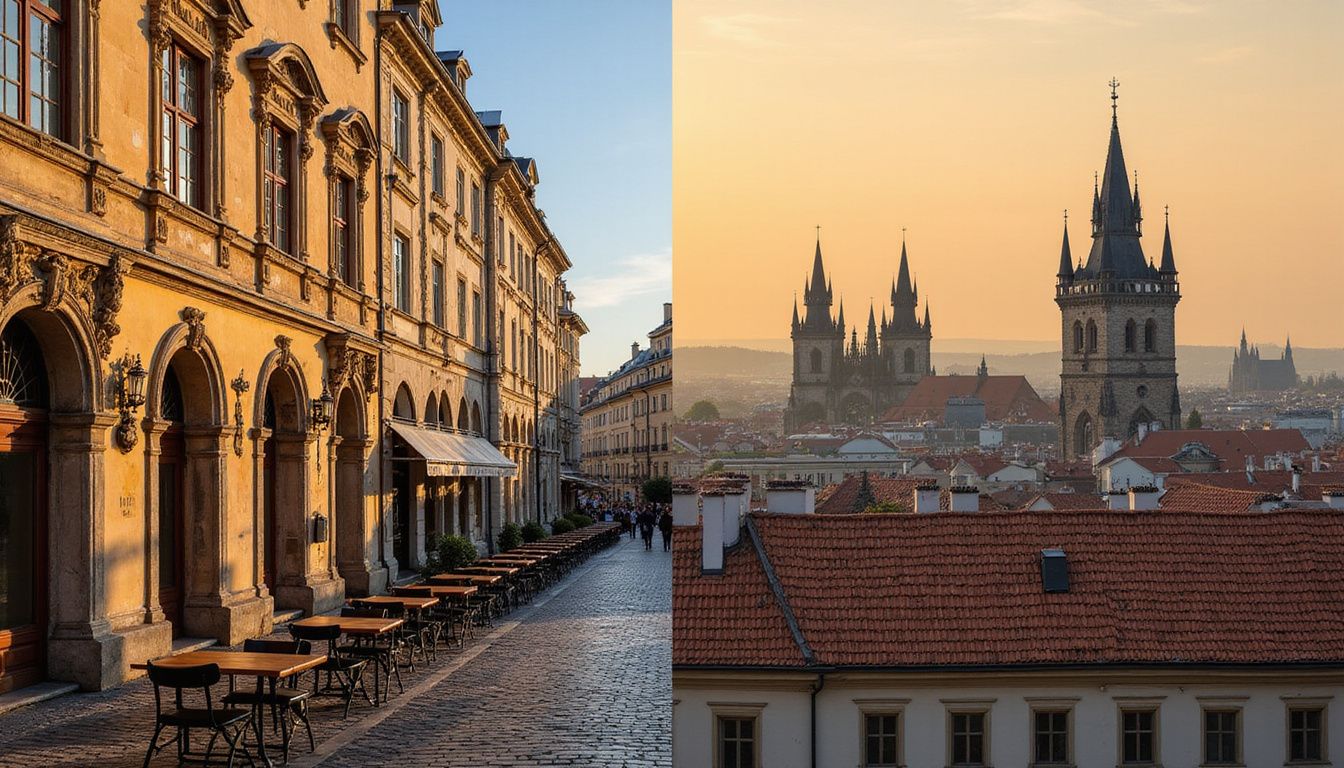
Both cities pack serious cultural punch, but they serve up completely different flavors. Vienna dazzles with imperial grandeur and Gustav Klimt masterpieces, while Prague charms with medieval streets and centuries-old astronomical clocks that still tick away the hours.
Museums and Historical Sites
Vienna's museum scene puts Prague to shame with its world-class collections. The Upper Belvedere Palace houses Gustav Klimt's famous painting "The Kiss" alongside other Austrian masterpieces.
MuseumsQuartier ranks among Europe's largest cultural complexes, featuring contemporary art galleries and interactive exhibits. The Third Man Museum offers a quirky dive into post-war Vienna through the lens of the classic film.
Meanwhile, Hofburg Palace showcases centuries of imperial history with its lavish state rooms and crown jewels.
Prague counters with its fairy-tale architecture and medieval charm. Prague Castle dominates the skyline as one of the world's largest ancient castle complexes. St. Vitus Cathedral inside the castle grounds displays stunning Gothic architecture and royal tombs.
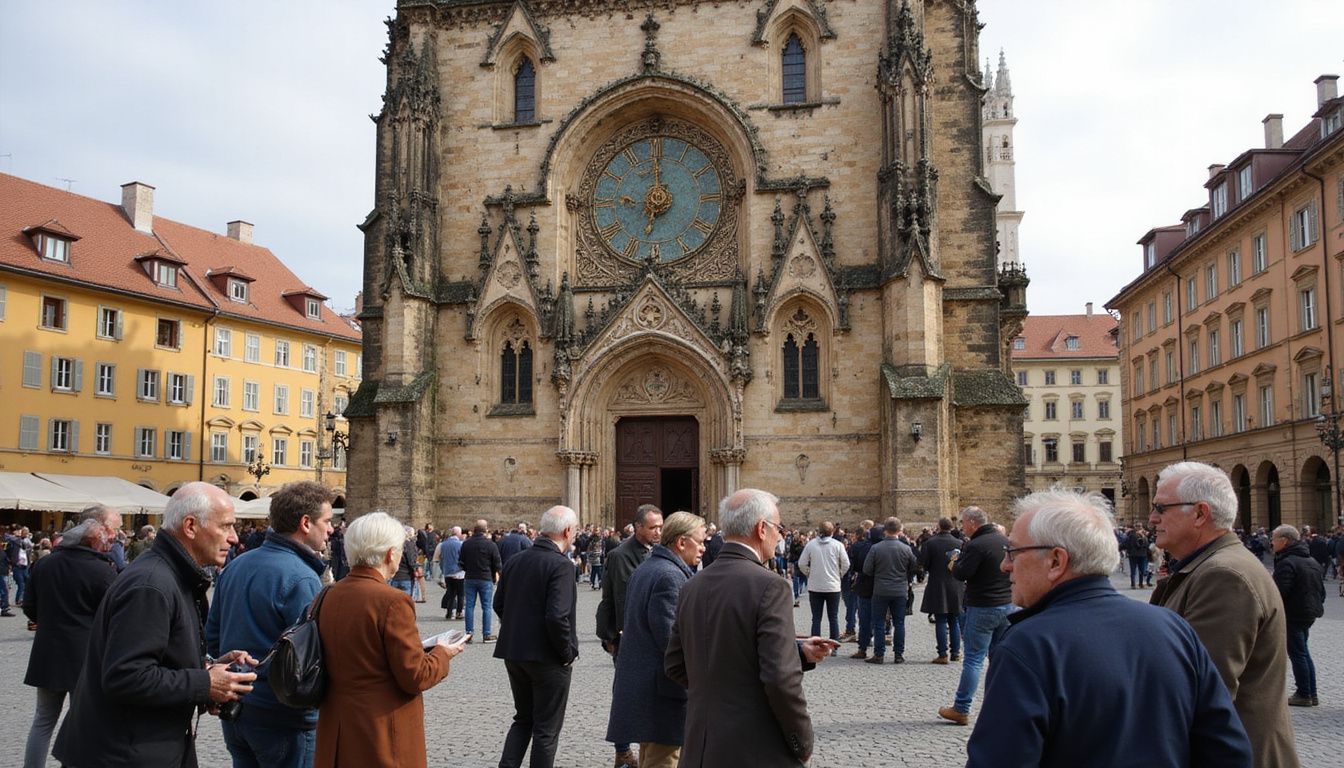
The Prague Astronomical Clock draws crowds every hour with its mechanical show, though many visitors find it underwhelming after the hype. Charles Bridge offers living history with its baroque statues and street performers, connecting the old town to the castle district across the Vltava River.
Prague's food scene tells a different story than Vienna's refined dining culture.
Art and Architecture
Vienna showcases imperial palaces that tell stories of centuries past. The city's grandeur shines through ornate baroque facades and classical columns. Schönbrunn Palace stands as a testament to Habsburg power, while the Kunsthistorisches Museum houses masterpieces from across Europe.
Gothic cathedrals pierce the skyline alongside neoclassical buildings that speak of Austria's rich musical heritage.
Prague paints a different picture with its fairy-tale Gothic spires and colorful baroque buildings. The city's artistic traditions bloom in every cobblestone street and ancient bridge.
Charles Bridge connects medieval towers to renaissance palaces, creating a living museum of European architecture. Prague Castle dominates the horizon, its Gothic cathedral rising above red-tiled roofs that seem pulled from a storybook.
Both cities offer architectural treasures, but Vienna leans toward imperial magnificence while Prague embraces romantic medieval charm.
Architecture is frozen music, and both Vienna and Prague compose symphonies in stone.
Overrated and Underrated Destinations: Stay Quality Insights
Both Vienna and Prague face the classic tourist trap dilemma. Prague often gets labeled as overrated due to crowded accommodations in the Old Town that charge premium prices for basic rooms.
Many hotels near Prague Castle promise stunning views but deliver tiny windows facing brick walls. The city's popularity has driven up costs while quality sometimes takes a backseat.
Vienna presents a different story altogether. The Austrian capital tends to be underrated for accommodation value, especially outside the Ring district. Hotels here maintain higher standards even at budget levels.
You'll find better room sizes, cleaner facilities, and more honest photography in listings. Prague's charm can blind travelers to subpar stays, while Vienna's reputation for precision extends to its hospitality industry.
Smart travelers dig deeper into reviews and avoid booking solely based on location proximity to major attractions.
Acomodations
Many travelers fall into the trap of booking accommodations based on glossy photos and glowing reviews, only to discover their "dream" destination fails to live up to expectations.
Popular European cities often rank among the most disappointing places for stay quality, with Vienna and Prague both appearing on lists of overrated destinations where hotels charge premium prices for subpar experiences.
Tourist-heavy areas in these cities frequently offer cramped rooms, outdated facilities, and poor service despite their prime locations and hefty price tags.
Social media hype and travel influencers on platforms like facebook create unrealistic expectations about certain neighborhoods and hotels in both Czech Republic and Austria. Travelers often pay inflated rates for accommodations near famous landmarks, expecting luxury but receiving mediocre service and amenities.
Smart visitors research beyond the surface-level marketing and seek authentic experiences in lesser-known districts where local establishments provide better value and genuine hospitality.
Food and Drink
The food scene in these two cities tells completely different stories - Vienna serves up imperial elegance with its sachertorte and wiener schnitzel traditions, while Prague pours hearty Czech comfort food alongside world-class beer that puts most other European cities to shame.
Traditional Dishes
Vienna serves up comfort food that tells stories of imperial grandeur. Wiener schnitzel takes center stage as the city's most famous export, featuring tender veal pounded thin and coated in golden breadcrumbs.
Viennese cuisine reflects centuries of Habsburg influence, blending Austrian traditions with Hungarian and Czech flavors. Sachertorte reigns supreme among desserts, with Hotel Sacher and Demel battling over the authentic recipe for generations.
Apple strudel wraps paper-thin pastry around spiced apples, creating layers that melt on your tongue. Café Central and other historic coffeehouses serve these classics alongside strong coffee, maintaining traditions that date back to the Ottoman siege.
Prague dishes tell a different tale, rooted in hearty Bohemian cooking that sustained workers through harsh winters. Goulash dominates menus across the city, though purists argue the Czech version differs from its Hungarian cousin.
Roast pork with sauerkraut and dumplings fills plates at traditional taverns, offering substance over sophistication. Czech beer culture shapes the dining experience more than coffee ever could.
Food tours reveal hidden gems beyond tourist areas, where locals still gather for svíčková na smetaně, beef sirloin swimming in cream sauce. Prague's traditional dishes cost significantly less than Vienna's refined offerings, making hearty meals accessible to budget travelers exploring Czechia's capital.
Coffee Culture vs. Beer Culture
Coffee culture thrives in the Austrian capital's elegant coffeehouses. These traditional establishments serve more than just drinks. They offer a social experience that encourages slow conversation and quiet contemplation.
Locals spend hours reading newspapers, playing chess, or simply watching the world pass by through large windows. The atmosphere promotes relaxation and intellectual discussion. Coffee preparation follows time-honored rituals that date back centuries.
Baristas craft each cup with careful attention to detail. The experience costs more than a quick caffeine fix, but visitors pay for ambiance and tradition.
Prague's beer scene tells a different story entirely. The Czech capital boasts more breweries per capita than most European cities. Pubs fill with locals after work, creating a lively social atmosphere that contrasts sharply with coffee shop tranquility.
Beer costs less than coffee in many establishments. Groups gather around wooden tables to share stories and laugh together. The culture celebrates community over solitude. Czech brewmasters have perfected their craft over generations, producing some of Europe's finest lagers.
Travelers who prefer social energy over quiet reflection will find Prague's beer halls more appealing than coffeehouse culture.
Sightseeing Highlights
Both cities pack enough jaw-dropping sights to make your camera storage cry for mercy, but each offers completely different flavors of European grandeur that'll leave you planning your next trip before you've even unpacked.
Iconic Landmarks in Vienna
Vienna serves up architectural masterpieces that put other European capitals to shame. Schönbrunn Palace dominates the city's imperial landscape with its 1,441 rooms and sprawling baroque gardens.
St. Stephen's Cathedral pierces the skyline with its colorful tiled roof, while the Hofburg Palace complex sprawls across the city center like a mini-city within a city. These landmarks pack more history per square foot than most travelers can absorb in a single visit.
Belvedere Palace houses Gustav Klimt's famous "The Kiss" alongside other Austrian treasures. The Vienna State Opera draws music lovers from across the globe, much like how Munich attracts beer enthusiasts or how Rick Steves' Europe guides travelers to hidden gems in Germany.
Smart travelers use tools like BookYolo to analyze accommodation options near these landmarks, avoiding overpriced hotels that prey on tourist desperation. The AI-powered service reviews listings and guest feedback to uncover hidden details that standard booking sites miss completely.
Must-See Attractions in Prague
Prague Castle dominates the skyline like a fairy-tale fortress. This massive complex houses St. Vitus Cathedral, Old Royal Palace, and Golden Lane. Charles Bridge connects Old Town with Lesser Town through 16 stone arches.
Street artists and musicians fill the bridge with life during daylight hours. The Astronomical Clock in Old Town Square draws crowds every hour for its medieval puppet show. Gothic spires and baroque facades surround this historic square.
Prague's Jewish Quarter tells stories that span centuries. The Old Jewish Cemetery contains over 12,000 tombstones stacked in layers. Six synagogues showcase different periods of Jewish history in Central Europe.
Wenceslas Square stretches like a wide boulevard filled with shops and restaurants. The National Museum anchors one end of this cultural hub. Day trips to Cesky Krumlov offer medieval charm just two hours south of Prague.
This UNESCO World Heritage town features a stunning castle perched above the Vltava River.
Avoiding Tourist Traps in Major Cities
Tourist traps in Vienna and Prague prey on unsuspecting visitors with overpriced restaurants near major attractions. Skip the cafes directly outside Schönbrunn Palace or Prague Castle.
Walk two blocks away instead. You'll find authentic local spots with better food at half the price.
Street vendors selling "traditional" souvenirs often charge triple what locals pay. Head to neighborhood markets where residents shop. Rick Steves' Europe guidebooks highlight these hidden gems that most tourists miss.
Download translation apps to read menus in Czech or German. This simple trick helps you spot tourist-targeted pricing immediately. Local food halls and residential districts offer genuine experiences without the inflated costs that plague popular squares and landmark areas.
Smart travelers skip the obvious spots and dig deeper into both Vienna and Prague. Rick Steves' Europe guidebooks often highlight lesser-known neighborhoods that locals actually visit.
Head to Vienna's Naschmarkt early in the morning before tour groups arrive, or explore Prague's Vinohrady district instead of staying glued to Old Town Square. Apps like Foursquare and local Instagram hashtags reveal where residents grab coffee and shop for groceries.
Street food vendors near major attractions often charge double what you'd pay three blocks away. Check restaurant menus for prices in multiple languages, a dead giveaway that they're targeting visitors rather than locals.
Many savvy travelers use the "walk 10 minutes from any landmark" rule to find authentic experiences. Consider day trips to nearby gems like Salzburg or the Tyrol region, where you'll encounter fewer crowds and better value for your money.
Not so great
Tourist traps are just the tip of the iceberg. Scammers target travelers who stand out like sore thumbs in both Vienna and Prague. Local travel habits help you blend in and avoid becoming a mark.
Rick Steves' Europe guides teach valuable lessons about moving through cities like a resident rather than a tourist.
Experienced travelers download local transit apps and learn basic phrases in German or Czech. They eat where locals eat, shop at neighborhood markets, and avoid areas packed with tour groups.
Street vendors near major attractions often overcharge tourists by 300% or more. Locals know which restaurants display menus in multiple languages, a red flag for inflated prices. They also recognize common scams like the "gold ring" trick or fake police checkpoints that target confused visitors.
Cost Comparison
Prague delivers exceptional value while Vienna commands premium prices - understanding these financial differences can make or break your European adventure.
Accommodation and Dining
Your wallet will feel the difference between Vienna and Prague immediately. Vienna hotels cost about 30% more than comparable Prague accommodations. A decent three-star hotel in Vienna runs around $120 per night, while Prague offers similar quality for $85.
Budget travelers find better deals in Prague's historic center than Vienna's expensive districts.
Food prices tell a similar story. Vienna restaurant meals average $25-35 per person at mid-range spots. Prague serves hearty traditional dishes for $15-20 per person. Both cities offer excellent value at local markets and casual eateries.
Vienna's coffee houses charge premium prices for the experience, but Prague's beer halls deliver authentic atmosphere without breaking the bank.
Price vs. Quality in European Cities
European cities often play tricks on travelers' wallets. Prague delivers exceptional value that makes Vienna look expensive by comparison. A decent hotel room in Prague costs half what you'd pay in Vienna for similar quality.
Restaurants in Prague serve hearty portions at prices that won't break the bank, while Vienna's dining scene can drain your travel budget faster than you can say "schnitzel.".
Vienna charges premium prices for its imperial reputation, but smart travelers know Prague offers comparable experiences without the hefty price tag. Coffee shops in Vienna might charge €5 for what costs €2 in Prague's charming cafes.
Both cities showcase stunning architecture and rich history, yet Prague lets you enjoy these treasures without emptying your savings account. Rick Steves' Europe guides consistently highlight how Prague provides better bang for your buck compared to Austria's capital city.
Some cities charge premium prices but deliver budget-level experiences. Paris often tops this list, where travelers pay luxury rates for cramped hotel rooms and overpriced meals. London follows closely behind, with sky-high accommodation costs that rarely match the actual value you receive.
These destinations bank on their famous names while cutting corners on service quality.
Prague stands out as a refreshing exception to this trend. The city offers excellent value with affordable hotels that actually deliver on their promises. Restaurant meals cost a fraction of what you'd pay in Vienna, yet the quality often exceeds expectations.
Rick Steves' Europe guides consistently highlight Prague's ability to provide authentic experiences without breaking the bank, making it a smart choice for budget-conscious travelers who refuse to compromise on quality.
That budget hotel might seem like a steal at $40 per night, but hidden fees pile up fast. Resort fees, parking charges, Wi-Fi costs, and breakfast add-ons can double your final bill.
Many travelers book cheap accommodations only to discover mandatory cleaning fees, tourist taxes, and service charges at checkout. These surprise costs hit hardest in popular destinations like Vienna and Prague, where budget properties often charge extra for basic amenities.
Cheap hotels also cut corners on quality, leading to bigger problems down the road. Poor soundproofing means sleepless nights, weak Wi-Fi disrupts work plans, and broken air conditioning ruins summer trips.
Travelers often end up booking additional services or switching hotels mid-stay, spending more than they would have on a quality property from the start. Rick Steves' Europe guides warn against this penny-wise, pound-foolish approach to accommodation booking.
Both Vienna and Prague hide sneaky fees that can double your accommodation costs. Hotels charge resort fees, Wi-Fi fees, and parking fees that never appear in the initial booking price.
Airbnb hosts add cleaning fees, service charges, and security deposits that transform a $50 room into a $120 nightmare. Prague hotels often tack on city taxes and breakfast charges after you arrive.
Vienna properties love surprise parking fees that cost more than your actual room rate.
Smart travelers read the fine print before clicking "book now." Check for cleaning fees that exceed one night's stay cost. Look for mandatory resort fees disguised as "amenities." Calculate the total price including all taxes and charges before making your decision.
Rick Steves' Europe guidebooks warn about these hidden costs in major European cities. Your dream vacation budget can quickly become a financial headache if you ignore these extra charges.
Transportation and Activities
Getting around Vienna costs more than Prague, but both cities offer excellent public transport systems. Vienna's metro, trams, and buses run like clockwork, though a daily pass will set you back around $8.
Prague's transport network covers the entire city for about half that price. Rick Steves' Europe guide recommends buying multi-day passes in both cities to save money on frequent trips.
Activity costs paint a different picture entirely. Prague's concert tickets, museum entries, and guided tours cost significantly less than Vienna's cultural offerings. A classical music performance in Vienna's famous venues can cost $50-100, while Prague's equally impressive concerts start around $20.
Museum passes work differently in each city, with Vienna offering better value for art lovers planning multiple gallery visits. Your choice between these cities often comes down to whether you prefer Vienna's polished elegance or Prague's budget-friendly charm, which brings us to smart accommodation strategies.
Accommodation: How to Choose Wisely
Booking the wrong place can turn your dream trip into a nightmare faster than you can say "false advertising." Smart travelers learn to spot the warning signs before they hand over their credit card and find themselves stuck in a dump that looked amazing online.
Hotel Photos, Descriptions, and Booking Red Flags
Hotel photos often tell a different story than reality. Professional photographers use wide-angle lenses to make tiny rooms look spacious. They shoot from perfect angles that hide damaged furniture or stains.
Bright lighting masks dingy walls and outdated fixtures. Many hotels post photos from their best rooms while you might get stuck with their worst. Check recent guest photos on review sites instead of relying solely on official hotel galleries.
Look for pictures that show the bathroom, view from windows, and actual bed size.
Property descriptions can mislead travelers just as much as photos. Hotels describe "cozy" rooms that turn out cramped. They call noisy street-facing rooms "vibrant" or "centrally located." Red flags include vague language about amenities, missing room dimensions, and no mention of nearby construction.
Pay attention to what descriptions don't say. Missing details about parking, Wi-Fi quality, or air conditioning often signal problems. Rick Steves' Europe guidebooks emphasize reading between the lines of hotel marketing speak.
Smart travelers cross-reference multiple booking platforms to spot inconsistencies in room descriptions and pricing.
Those glossy photos on booking sites work like magic tricks. Professional photographers use wide-angle lenses to make tiny rooms look spacious. They shoot from perfect angles that hide worn furniture and stained carpets.
Bright lighting masks dingy walls and outdated decor. Your brain falls for these visual tricks every time.
Smart travelers dig deeper than pretty pictures. Read recent guest reviews that mention room size and cleanliness. Look for photos taken by actual guests, not the marketing team. Check multiple booking platforms to spot inconsistencies in room descriptions.
Rick Steves' Europe guidebooks often warn about this exact problem in popular destinations. Trust your gut if something seems too good to be true.
Photos might fool you, but ignoring warning signs can cost you even more. Travel experts like Rick Steves' Europe guides warn about common booking mistakes that drain your wallet. Your brain plays tricks during the booking process.
Excitement about your Vienna or Prague trip clouds your judgment. You spot a cheap hotel rate and jump on it without reading reviews carefully.
Most travelers skip the fine print completely. Bad reviews get dismissed as "one-off complaints." Missing amenities become acceptable trade-offs for lower prices. Your vacation mindset makes you rationalize poor choices.
Smart travelers pause before clicking "book now" and check multiple sources for red flags.
Booking platforms trick your brain with clever word choices. Descriptions use emotional triggers that bypass logical thinking. A "cozy" room sounds charming, but it often means cramped.
"Rustic" might hide outdated facilities. Travel guides like Rick Steves' Europe warn about these marketing tactics. Your brain fills in gaps with positive assumptions. Properties labeled as "charming" or "authentic" create mental images that reality rarely matches.
Cognitive bias plays a huge role in booking decisions. Confirmation bias makes you focus on positive words while ignoring red flags. Anchoring bias occurs when the first impressive photo sets expectations.
Availability heuristic tricks you into believing recent positive reviews represent the full experience. These psychological patterns affect travelers whether they're booking in Prague's Old Town or exploring areas near Berchtesgarden.
Smart travelers learn to read between the lines and spot these mental traps before clicking "book now.
Smart travelers spot warning signs before they click "book now" on Airbnb listings. Photos that look too perfect often hide problems. Hosts who avoid answering direct questions raise immediate concerns.
Properties with zero recent reviews might signal trouble ahead. Rick Steves' Europe guides teach us to research thoroughly, and the same wisdom applies to vacation rentals.
Missing amenity details create unpleasant surprises upon arrival. Vague location descriptions can land you miles from attractions. Hosts demanding payment outside the platform break safety rules.
Multiple negative reviews about cleanliness or accuracy deserve serious attention. Trust your gut feelings about listings that seem off, because experienced travelers know that red flags usually signal bigger issues waiting to unfold.
Misleading Airbnb listings can turn your Vienna or Prague adventure into a nightmare. Photos that look too perfect often hide serious problems. Hosts who avoid answering specific questions about location or amenities raise red flags.
Listings with no recent reviews or suspiciously glowing feedback deserve extra scrutiny. Properties that seem too cheap for their location usually have hidden catches.
Smart travelers check for vague descriptions that use lots of marketing buzzwords but few concrete details. Missing or blurry photos of bathrooms and bedrooms signal trouble ahead.
Hosts who pressure you to book quickly or communicate outside the platform often run scams. Rick Steves' Europe guides recommend verifying the exact address and checking street view before booking.
Properties with frequent last-minute cancellations or hosts with multiple negative reviews about cleanliness should make you look elsewhere.
FAQs
1. Which city offers better value for budget travelers, Vienna or Prague?
Prague wins hands down for budget-conscious travelers. Your dollar stretches much further in the Czech capital, where meals and drinks cost about half what you'd pay in Vienna.
2. What makes Vienna special compared to Prague?
Vienna serves up imperial grandeur like nowhere else in Europe. The city's coffee culture runs deep, and you can practically hear Mozart's music floating through the elegant streets.
3. How do the tourist crowds compare between these two cities?
Prague gets packed tighter than a sardine can during peak season. Vienna offers more breathing room, though both cities buzz with visitors year-round.
4. Which destination works better for first-time visitors to Central Europe?
Prague takes the crown for newcomers to the region. The fairy-tale architecture practically jumps off postcards, and Rick Steves' Europe guides highlight why this medieval gem captivates travelers instantly.
Back
