Destinations Guides
Written by
BookYolo Team

Choosing between Paris and Rome feels like picking your favorite child. Both European cities attract millions of travelers each year, with Paris welcoming over 38 million visitors annually while Rome draws nearly 10 million tourists.
This guide breaks down the key differences in food, culture, attractions, and practical travel tips to help you decide which destination fits your travel style. Your perfect European adventure awaits.
Key Takeaways
Paris attracts over 38 million visitors annually compared to Rome's 10 million, making Paris significantly more crowded for travelers.
Paris offers refined culinary artistry with Michelin-starred restaurants, while Rome focuses on simple, traditional dishes using fresh local ingredients.
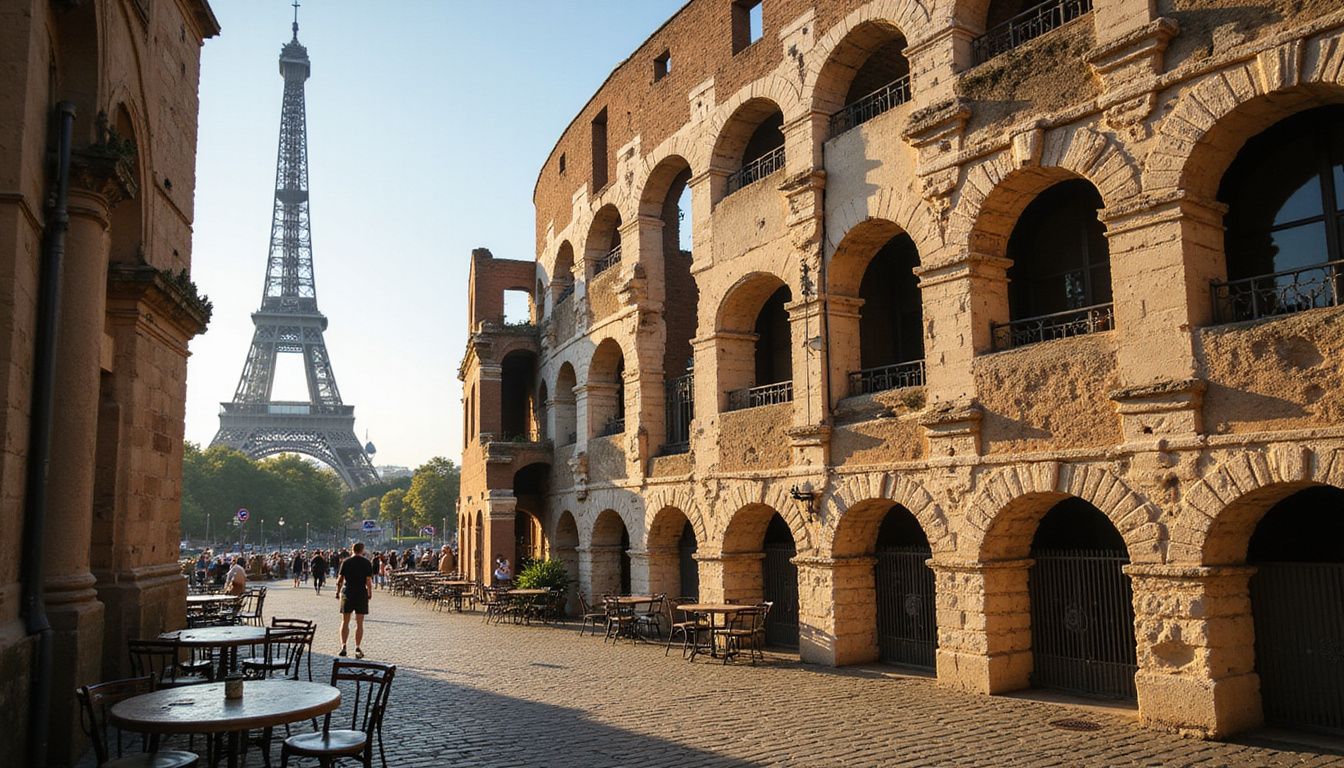
Rome provides direct access to 2,000-year-old monuments like the Colosseum, while Paris showcases elegant landmarks like the Eiffel Tower.
Paris operates one of the world's most efficient metro systems, while Rome relies on slower buses and limited metro coverage.
Both cities rank among the top 10 destinations with poor hotel review accuracy, requiring careful research before booking accommodations.
Food and Dining: Paris vs. Rome

Both cities serve up culinary magic that'll make your taste buds dance, but each offers a completely different flavor adventure. Paris tempts you with buttery croissants and wine-soaked evenings, while Rome delivers pasta perfection and gelato that melts faster than your willpower.
French Cuisine in Paris
Paris serves up culinary magic that makes food lovers weak in the knees. The city's bakeries fill sidewalks with buttery croissant aromas each morning. Classic bistros line cobblestone streets, offering coq au vin and beef bourguignon that taste like pure comfort.
French chefs treat cooking like an art form. They transform simple ingredients into masterpieces. Local markets burst with fresh produce, artisanal cheeses, and crusty baguettes. Street vendors sell crepes that melt in your mouth.
In Paris, they simply stared when I spoke to them in French; I never did succeed in making those idiots understand their own language. - Mark Twain
Michelin-starred restaurantsdot the city like culinary jewels. Yet hole-in-the-wall cafes often serve the most memorable meals. Wine flows freely at lunch, and dinner stretches late into the evening.
Parisians take their time with food. They savor each bite and conversation. The dining culture here teaches you to slow down and appreciate life's simple pleasures.
Italian Cuisine in Rome
While Paris captivates with its refined culinary artistry, Rome takes a completely different approach that wins hearts through pure simplicity. Italian cuisine in Rome revolves around fresh, local ingredients that speak for themselves without fancy techniques or elaborate presentations.
Roman dishes tell stories of ancient traditions passed down through generations. Carbonara, cacio e pepe, and amatriciana represent the holy trinity of Roman pasta, each requiring just a handful of ingredients but demanding perfect execution.
Local trattorias serve these classics alongside supplì (fried rice balls) and maritozzi (sweet breakfast buns) that locals grab on their way to work. The city's food culture thrives in neighborhood markets like Campo de' Fiori, where vendors sell produce that ends up on dinner tables the same day.
Pizza al taglio shops dot every corner, offering rectangular slices that Romans eat while walking through cobblestone streets near the Roman Forum.
Dining Experiences and Ambiance
Rome's culinary scene sets the stage for something completely different. Dining experiences in both cities feel like stepping into different worlds.
Paris restaurants embrace formal elegance with white tablecloths and attentive waiters. The French take their time with meals, turning dinner into a three-hour affair. Candlelit bistros line cobblestone streets near the Seine River, creating romantic settings that make you forget about time.
Rome flips this script entirely. Trattorias buzz with animated conversations and clinking glasses. Families gather around large tables in Trastevere, sharing plates of pasta while children run between chairs.
The atmosphere feels more like a neighborhood party than a formal dining event. Roman restaurants stay open later, with locals often eating dinner after 9 PM while tourists wonder why everything seems closed at 7.
Art and Architecture Comparison
Both cities showcase masterpieces that have shaped Western civilization for centuries. Paris dazzles with the Louvre's treasures and the Arc de Triomphe's grandeur, while Rome captivates visitors with the Colosseum's ancient majesty and the Vatican Museums' sacred art collections.
Iconic Landmarks in Paris
Paris serves up iconic landmarks like a master chef plates a perfect meal. The Eiffel Tower stands tall as the city's crown jewel, drawing millions of visitors who snap photos from every angle.
This iron lady rises 1,083 feet into the sky and lights up each evening in a golden glow. Arc de Triomphe commands attention at the western end of the Champs-Élysées, honoring France's military victories with its massive stone arches.
Visitors climb 284 steps to reach the top for sweeping city views.
Notre-Dame Cathedral tells centuries of French history through its Gothic spires and flying buttresses, though restoration continues after the 2019 fire. The Louvre houses world-famous masterpieces behind its glass pyramid entrance, making art lovers feel like kids in a candy store.
Montmartre's winding cobblestone streets lead to Sacre-Coeur Basilica, perched high above the city like a white beacon. Each landmark offers a different slice of Parisian culture, from royal grandeur to bohemian charm.
Paris is always a good idea, especially when you're standing beneath the Eiffel Tower watching the sunset paint the city gold.
Historical Monuments in Rome
While Paris dazzles with its elegant landmarks, Rome takes you on a journey through ancient history that spans over 2,000 years. The Eternal City serves as an open-air museum where every street corner tells a story of emperors, gladiators, and gods.
The Colosseum stands as Rome's crown jewel, where gladiators once fought for their lives before roaring crowds. This massive amphitheater could hold 80,000 spectators and still amazes visitors today.
Just a short walk away, the Pantheon showcases Roman engineering genius with its perfect dome that has inspired architects for centuries. The Forum Romanum spreads out like a stone puzzle, revealing temples, basilicas, and government buildings where Julius Caesar once walked.
Vatican City houses St. Peter's Basilica and the Sistine Chapel, where Michelangelo's masterpiece covers the ceiling in breathtaking detail. The Trevi Fountain captures hearts with its baroque beauty, while the Spanish Steps create a perfect spot for people-watching.
Each monument connects you directly to ancient civilizations that shaped our modern world.
Museums and Galleries in Both Cities
Paris houses the world's most famous art collection at the Louvre Museum. The Mona Lisa draws millions of visitors each year. The Musée d'Orsay showcases incredible Impressionist masterpieces.
Smaller galleries like the Picasso Museum offer intimate art experiences. Rick Steves travel guides recommend booking timed entries to avoid long lines.
Rome's Vatican Museums contain Michelangelo's stunning Sistine Chapel ceiling. The Capitoline Museums display ancient Roman sculptures and artifacts. Palazzo Altemps houses remarkable classical statues.
Local cuisine spots near these cultural sites provide perfect breaks between gallery visits. Both cities offer museum passes that save money and time for serious art lovers.
Food becomes the next major factor that separates these two incredible destinations.
Culture and Atmosphere
Both cities pulse with distinct energy that shapes every moment of your visit - Paris wraps you in romantic elegance while Rome throws you headfirst into passionate, chaotic beauty that makes your heart race.
Romantic Charm of Paris
Paris casts a spell that makes hearts skip beats. Couples stroll hand-in-hand along the Seine River while street musicians play soft melodies. The city's golden streetlights create magic after sunset.
Cafés spill onto cobblestone sidewalks where lovers share wine and whispered conversations. Artists sketch portraits near Montmartre's winding streets. Flower vendors sell fresh roses at every corner.
The Eiffel Tower sparkles every hour on the hour, creating perfect moments for proposals. Bookstores like Shakespeare and Company invite quiet browsing sessions together. Public transportation connects romantic spots throughout the city with ease.
Hidden gems reveal themselves around every corner in this enchanting capital. Couples discover secret gardens tucked behind iron gates. Small bistros serve candlelit dinners away from tourist crowds.
The Latin Quarter's narrow alleys echo with centuries of love stories. Bridge locks once symbolized eternal promises before city officials removed them. Versailles offers day trips where royalty once walked through magnificent gardens.
Seine river cruises provide intimate views of illuminated monuments. Local markets burst with fresh flowers, cheese, and wine for romantic picnics. Cultural experiences bloom in intimate jazz clubs and cozy wine bars.
Travel planning becomes effortless when romance fills every street corner.
Vibrant Energy of Rome
Rome pulses with life from dawn to midnight. Street vendors call out their wares while scooters zip through narrow cobblestone streets. Locals gather in piazzas, sharing animated conversations over espresso.
The city never truly sleeps. Ancient ruins stand beside bustling trattorias where families feast together. Children play soccer in small squares while their grandparents watch from shaded benches.
The Tiber River flows through this urban symphony, carrying the sounds of laughter and church bells. Rome's energy feels raw and authentic, like stepping into a living postcard.
Tourists and Romans blend together in this magnificent chaos. Markets overflow with fresh produce, flowers, and handmade goods. The aroma of fresh bread drifts from bakeries while church bells mark each passing hour.
Street musicians perform near fountains, adding melodies to the urban soundtrack. Restaurants spill onto sidewalks, creating outdoor dining rooms under starlit skies. The city's rhythm changes throughout the day but never stops completely.
Rome embraces visitors with open arms, inviting them to join its eternal dance of history and modern life.
Activities and Attractions
Both cities offer incredible activities that will make your Instagram followers jealous, but choosing between Paris's romantic strolls and Rome's ancient adventures depends on what gets your heart racing.
Top Things to Do in Paris
Paris offers countless attractions that capture hearts and imaginations worldwide. This city blends historic charm with modern excitement like nowhere else.
Climb the Eiffel Tower - Book tickets online to skip long lines at this iron masterpiece. Visit during sunset for breathtaking views over the Seine River and city rooftops.
Explore the Louvre Museum - See the Mona Lisa and Venus de Milo among 35,000 artworks. Purchase timed entry tickets in advance to avoid disappointment during peak seasons.
Stroll through Montmartre - Walk cobblestone streets where Picasso once painted. Stop at Sacré-Cœur Basilica for panoramic city views and street artist performances.
Take a Seine River Cruise - Glide past Notre-Dame Cathedral and historic bridges on a relaxing boat ride. Evening cruises offer romantic lighting and dinner options.
Visit Versailles Palace - Travel 30 minutes from central Paris to explore opulent royal chambers. The gardens span 2,000 acres with fountains and manicured lawns.
Shop along Champs-Élysées - Browse flagship stores from international brands on this famous avenue. End at Arc de Triomphe for photos and city panoramas.
Discover Latin Quarter - Wander narrow medieval streets filled with bookshops and cafés. Visit Panthéon where famous writers and scientists rest in peace.
Experience Marais District - Explore trendy boutiques, art galleries, and Jewish quarter history. Sample falafel from L'As du Fallafel, a local institution since 1979.
Rome awaits with equally impressive attractions that showcase ancient civilization.
Unmissable Experiences in Rome
Rome offers experiences that will stick with you long after you leave. The Eternal City delivers moments you can't find anywhere else.
Explore the Colosseum at sunrise - Book an early morning tour to beat the crowds. The golden light makes the ancient amphitheater look magical. You'll have space to take photos without fighting tourists.
Toss a coin at Trevi Fountain - Legend says throwing a coin over your shoulder guarantees your return to Rome. Visit early morning or late evening for fewer people. The fountain looks stunning when lit up at night.
Climb St. Peter's Basilica dome - The 551 steps lead to breathtaking views over Vatican City. You'll see all of Rome spread out below you. The climb gets narrow, but the payoff is worth every step.
Wander through Trastevere at night - This neighborhood comes alive after dark with street musicians and outdoor dining. The cobblestone streets and ivy-covered buildings create perfect Instagram moments. Local restaurants serve authentic Roman dishes here.
Take a day trip to Tivoli - Villa d'Este and Hadrian's Villa sit just 30 minutes from Rome by train. The Renaissance gardens and ancient ruins offer a peaceful escape from city crowds. Both sites showcase incredible Italian architecture and history.
Eat gelato near the Pantheon - The 2,000-year-old building still amazes visitors with its massive dome. Grab authentic gelato from nearby shops and enjoy it while admiring the architecture. The Pantheon stays open late and admission is free.
Shop at Campo de' Fiori market - Fresh produce, flowers, and local specialties fill this historic square every morning except Sunday. Romans have shopped here for centuries. The market transforms into a lively bar scene after dark.
Walk the Appian Way - This ancient Roman road stretches beyond the city limits with original stone paving. You can rent bikes to cover more ground and see ancient tombs and catacombs. The countryside views provide a break from urban sightseeing.
Getting around these attractions becomes much easier once you understand Rome's transportation system.
Expert Tips: How to Avoid Pickpocket Areas When Traveling
Protecting yourself from scams leads naturally to staying safe from pickpockets. Thieves target tourists who look lost or distracted, especially around famous spots like St. Peter's Basilica in Rome or busy train stations.
Keep your hands on your belongings near crowded tourist attractions. Popular sites like the Colosseum or Eiffel Tower attract both visitors and thieves. Hold your bag in front of your body.
Avoid wearing expensive jewelry or flashing cash in public spaces. Pickpockets scan crowds for easy targets. Leave fancy watches and rings at your hotel.
Stay alert on public transportation during rush hours. Buses and metro cars get packed tight. Thieves use the chaos to grab wallets and phones.
Choose restaurants and cafes away from major tourist zones. Pickpockets hang around places where tourists eat and drink. Walk a few blocks from main attractions for safer dining.
Carry a decoy wallet with small bills and expired cards. This old trick still works well. Keep your real money and cards hidden elsewhere.
Trust your gut feeling about suspicious people following you. Pickpockets often work in teams. One person distracts while another steals your stuff.
Use hotel safes for passports and extra cash. Leave valuable items locked up when you explore. Carry only what you need for the day.
Dress like locals instead of obvious tourists. Avoid wearing fanny packs or carrying large maps. Blend in with the crowd around you.
Accessibility and Transportation
Getting around Paris and Rome feels like comparing apples to oranges - one city flows like clockwork while the other dances to its own ancient rhythm, and knowing which transportation style matches your travel personality can make or break your European adventure.
Getting Around Paris
Paris operates one of the world's most efficient metro systems. The subway connects every corner of the city through 14 color-coded lines. Trains arrive every 2-4 minutes during peak hours.
You can buy single tickets or day passes at any station. The metro runs from 5:30 AM until about 1:15 AM on weekdays. Service extends until 2:15 AM on Fridays and Saturdays. Most stations feature clear maps and digital displays showing arrival times.
Walking remains the best way to soak up Paris's charm. The city spans only 40 square miles, making most attractions reachable on foot. Bike-sharing programs like Vélib' offer another great option.
You'll find rental stations every few blocks throughout the city. Taxis and ride-sharing apps work well for longer distances or late-night trips. Bus routes cover areas the metro doesn't reach as effectively.
The city's flat terrain makes cycling pleasant and practical for most visitors.
Navigating Rome
Rome's public transportation system runs on buses, trams, and two metro lines. The metro covers major tourist spots like the Colosseum and Vatican City, though it doesn't reach every corner of the ancient city.
Bus routes fill the gaps, but they move slowly through narrow streets packed with traffic. Purchase a Roma Pass for unlimited rides plus skip-the-line access to major attractions.
Walking remains the best way to explore Rome's historic center. Cobblestone streets connect famous landmarks within short distances. Taxis work well for longer trips, but they cost more than public transport.
Many visitors rent bikes or scooters to zip around the city faster. The eternal city rewards those who wander on foot, revealing hidden piazzas and ancient ruins around every corner.
Food options in both cities offer completely different experiences worth exploring.
Day Trips from Each City
Both Paris and Rome offer incredible day trips that can turn your European adventure into something truly special - from the Palace of Versailles just outside Paris to the ancient ruins of Pompeii near Rome, these escapes let you explore even more of what makes each destination magical.
Best Day Trips from Paris
Paris serves as a perfect base for exploring France's most stunning destinations. You can reach amazing places within just a few hours by train or car.
Versailles Palace - Take a 40-minute train ride to see the opulent palace where French royalty lived. The gardens stretch for miles and showcase incredible fountains.
Normandy D-Day Beaches - Drive two hours to visit historic World War II landing sites. You'll walk on Omaha Beach and see the American Cemetery.
Loire Valley Castles - Explore fairy-tale châteaux like Chambord and Chenonceau in just two hours by car. These Renaissance masterpieces sit along the peaceful Loire River.
Champagne Region (Reims) - Sip bubbly at famous champagne houses just 45 minutes away by high-speed train. Dom Pérignon and Moët & Chandon offer cellar tours.
Giverny (Monet's Garden) - Visit the artist's colorful garden that inspired his water lily paintings. The train journey takes 45 minutes, then a short bus ride.
Fontainebleau Palace and Forest - Discover Napoleon's favorite retreat just one hour south of Paris. Rock climbers love the massive boulders scattered throughout the forest.
Bruges, Belgium - Catch a morning train for a three-hour journey to this medieval gem. Canals wind through cobblestone streets lined with chocolate shops.
Chantilly Castle - See France's largest collection of ancient manuscripts at this elegant château. The 30-minute train ride makes this an easy half-day trip.
Top Day Trips from Rome
While France offers incredible day trips from its capital, Italy serves up equally amazing adventures from Rome. The Eternal City puts you within striking distance of ancient ruins, charming coastal towns, and volcanic wonders.
Tivoli's Villa d'Este and Hadrian's Villa - Take a 45-minute train ride to explore two UNESCO World Heritage sites. Villa d'Este dazzles with Renaissance fountains and gardens, while Hadrian's Villa showcases Roman imperial architecture at its finest.
Florence by High-Speed Train - Catch an early morning train for a same-day trip to the Renaissance capital. You'll have time to see the Duomo, Uffizi Gallery, and grab authentic gelato before heading back to Rome.
Pompeii and Mount Vesuvius - Board a train to Naples, then continue to this perfectly preserved ancient city. The ash-covered ruins tell stories of daily Roman life frozen in time 2,000 years ago.
Ostia Antica - Visit Rome's ancient port city just 30 minutes away by local train. These well-preserved ruins rival Pompeii but draw fewer crowds, making exploration more peaceful and personal.
Castel Gandolfo and Lake Albano - Escape to the Pope's summer residence and crater lake in the Alban Hills. The papal palace offers stunning views, while the lake provides a refreshing break from city heat.
Orvieto's Hilltop Cathedral - This medieval town perches dramatically on volcanic rock about 90 minutes north. The Gothic cathedral's facade sparkles with mosaics, and underground caves reveal Etruscan history.
Assisi and St. Francis Basilica - Journey to Umbria's spiritual heart where St. Francis lived and preached. The basilica houses Giotto frescoes, while cobblestone streets wind past medieval churches and monasteries.
Civita di Bagnoregio - Cross a footbridge to reach this dying hilltop village that's slowly crumbling into the valley. Only a handful of residents remain in this hauntingly beautiful medieval settlement.
Accommodation: Choosing Where to Stay
Finding the right place to crash can make or break your European adventure - and both Paris and Rome throw their own curveballs at travelers trying to book smart accommodations.
Best vs. Worst Cities for Booking Reliable Stays: A Staycation Comparison
Both Paris and Rome face challenges with accommodation reliability, though travelers experience different levels of booking satisfaction in each city.
City | Booking Reliability Score | Common Issues | Best Booking Practices |
|---|---|---|---|
Paris | Moderate to Good | Photo misrepresentation in tourist districts, overpriced Airbnb listings near Eiffel Tower | Book hotels in 3rd, 4th, or 11th arrondissements for better value and accuracy |
Rome | Variable | Historic center properties often lack accurate descriptions, noise levels underreported | Choose accommodations in Trastevere or Testaccio for authentic experiences |
Paris Strengths | High | Established hotel chains maintain consistent standards | Stick to verified properties with 100+ recent reviews |
Rome Strengths | Moderate | Family-run hotels offer personal touches and local insights | Contact properties directly for room confirmations and special requests |
Red Flags | Both Cities | Professional photos without guest images, prices significantly below market rate | Read negative reviews first, check cancellation policies carefully |
Hotel chains perform better than independent properties in both destinations. Booking platforms show similar patterns of inflated ratings across Paris and Rome. Smart travelers cross-reference multiple booking sites before making decisions. Transportation plays a huge role in accommodation satisfaction since both cities offer excellent public transit options.
Exploring the Top 20 Cities with the Worst Hotel Review Accuracy: Unveiling Tripadvisor's Insights
Hotel reviews can make or break your trip, but some cities are notorious for misleading guest feedback. TripAdvisor data reveals shocking gaps between advertised experiences and reality in major destinations worldwide.
Rank | City | Review Accuracy Issue | Common Problems |
|---|---|---|---|
1 | Las Vegas | Fake positive reviews | Hidden fees, outdated photos |
2 | Miami | Inflated ratings | Construction noise, poor service |
3 | Bangkok | Language barriers in reviews | Location misrepresentation |
4 | Dubai | Paid review manipulation | Overpriced amenities |
5 | Paris | Tourist trap bias | Tiny rooms, high expectations |
6 | Rome | Historical property issues | Old infrastructure, noise |
7 | New York | Price vs. value disconnect | Small spaces, street noise |
8 | London | Weather-related complaints | Heating issues, dampness |
9 | Barcelona | Seasonal review variations | Overcrowding, pickpockets |
10 | Istanbul | Cultural expectation gaps | Service style differences |
11 | Tokyo | Space expectations | Extremely small rooms |
12 | Amsterdam | Party reputation bias | Noise complaints, cleanliness |
13 | Prague | Budget hotel misrepresentation | False luxury claims |
14 | Marrakech | Cultural adjustment issues | Traditional vs. modern expectations |
15 | Bali | Monsoon season denial | Weather impact minimized |
16 | Mexico City | Safety concern omissions | Area security variations |
17 | Cairo | Infrastructure reality gaps | Power outages, water issues |
18 | Mumbai | Monsoon impact underreported | Flooding, transportation delays |
19 | Rio de Janeiro | Security situation minimized | Beach area safety concerns |
20 | Athens | Economic impact on services | Maintenance delays, staff cuts |
Paris ranks fifth on this troublesome list. Many travelers expect luxury but find cramped quarters and inflated prices. Rome sits at sixth place, with ancient charm often masking plumbing problems and thin walls. Smart travelers cross-reference multiple review platforms before booking. Airbnb versus hotel comparisons become crucial for making informed accommodation decisions.
Airbnb vs. Hotels for Security: Pros & Cons for Travelers
Travelers face a real dilemma choosing between Airbnb properties and traditional hotels, especially regarding personal safety and security measures.
Security Factor | Airbnb Pros | Airbnb Cons | Hotel Pros | Hotel Cons |
|---|---|---|---|---|
Access Control | Private entrance, no shared lobby areas | Key pickup locations vary, sometimes unsafe | 24/7 front desk staff, controlled entry points | Multiple guests accessing same areas |
Staff Presence | Complete privacy, no strangers around | Zero on-site assistance during emergencies | Round-the-clock security personnel available | Staff turnover affects familiarity with guests |
Background Checks | Host reviews provide guest feedback | Limited verification of property owners | Employee screening processes mandatory | Temporary workers may skip thorough vetting |
Emergency Response | Local hosts know area-specific risks well | Response times depend on host availability | Established protocols for crisis situations | Corporate policies might delay local action |
Property Security | Residential buildings blend with neighborhood | Security systems vary dramatically by listing | Standardized safety equipment across properties | Tourist-targeted locations attract criminals |
Guest Verification | Host can screen potential renters personally | Fake profiles slip through platform checks | Credit card and ID requirements standard | Walk-in guests bypass verification systems |
Insurance Coverage | Personal belongings covered by some hosts | Protection gaps exist between platforms and owners | Business insurance covers guest incidents | Claims processes take weeks to resolve |
Location Safety | Residential areas offer authentic local experience | Remote locations lack immediate help nearby | Central locations provide easy access to services | Tourist districts become pickpocket hotspots |
Smart travelers weigh these factors against their personal comfort levels. Solo female travelers often prefer hotels for the constant staff presence. Families might choose Airbnb properties for the added space and privacy. Business travelers frequently stick with established hotel chains for consistency. Adventure seekers embrace the unpredictability of private rentals. Your travel style determines which option makes more sense. Both accommodation types require basic safety precautions from guests. Trust your instincts about any booking that feels off. Read recent reviews carefully before making final decisions. Contact hosts or hotel managers with specific security questions. Pack a portable door alarm regardless of your choice.
Why You Trust Hotel Photos Too Much When Booking a Stay
Security concerns aside, booking decisions often hinge on visual appeal rather than reality. Hotel photos work like magic tricks on your brain. Professional photographers use wide-angle lenses to make tiny rooms look spacious.
They shoot from perfect angles that hide flaws. Bright lighting masks worn furniture and outdated decor.
Your mind fills in gaps with wishful thinking. A small corner shot becomes a grand suite in your imagination. Marketing teams know this psychological trick well. They select the most flattering images from hundreds of photos.
The result? You book based on fantasy, not facts. Smart booking means reading reviews alongside those glossy pictures.
How Listing Descriptions Deceive Your Brain: The Psychology of Cognitive Bias
Hotel listing descriptions work like magic tricks on your brain. They use clever words and phrases that trigger your emotions before logic kicks in. Your mind fills in gaps with positive assumptions, especially after reading terms like "cozy" or "charming." This happens because our brains prefer shortcuts over careful analysis.
Marketing teams know exactly which buttons to push. They craft descriptions that make you picture your perfect vacation, not the actual room you'll get. Your brain creates a mental image based on these carefully chosen words, and you book before reality has a chance to interfere.
Smart travelers learn to read between the lines and focus on facts rather than flowery language.
Why Travelers Ignore Red Flags When Booking: The Psychology Behind Ignoring Red Flags
Cognitive bias doesn't just affect how we read descriptions. It also makes us blind to obvious warning signs during the booking process. Travelers often ignore red flags because their brains play tricks on them.
Excitement about visiting places like St. Peter's Basilica in Rome can cloud judgment completely. People see what they want to see, not what's actually there.
Confirmation bias drives many poor booking decisions. Travelers focus on positive reviews while skipping negative ones. They dismiss complaints about noise, cleanliness, or safety as isolated incidents.
The brain seeks information that confirms our desires rather than challenges them. This mental shortcut saves time but costs money and peace of mind. Smart travelers using services like Zicasso learn to pause and examine all feedback before making final decisions.
FAQs
1. Which city offers better historical attractions, Paris or Rome?
Rome takes the crown for ancient history buffs. You can walk through the Colosseum where gladiators once fought, or visit St. Peter's Basilica in Vatican City. Paris shines with more recent history like Napoleon's tomb and stunning palaces.
2. Is Paris or Rome more budget-friendly for travelers?
Rome generally costs less than Paris for food and drinks. A pizza slice in Rome might cost half what a croissant costs in Paris. Both cities offer free walking tours and affordable public transport.
3. Which city has better food for tourists?
This question sparks heated debates at dinner tables worldwide! Rome serves authentic pasta, pizza, and gelato that will make your taste buds dance. Paris counters with croissants, cheese, and wine that could make angels weep.
4. Should first-time European travelers choose Paris or Rome?
Both cities offer magic for newcomers. Paris gives you the Eiffel Tower and world-class museums. Rome delivers ancient wonders like the Colosseum and Vatican treasures that have stood for centuries.
Back