

Destinations Guides
Written by
BookYolo Team




Choosing between Budapest and Prague for your next central europe adventure can feel like picking between two perfect gems. Both cities offer stunning old town districts, magnificent castles, and rich cultural experiences that draw millions of visitors each year.
This guide breaks down everything from thermal baths and ruin bars to charles bridge and prague castle, helping you decide which destination matches your travel style. Let's settle this debate once and for all.
Key Takeaways
Budapest offers unique thermal baths like Széchenyi Spa and vibrant ruin bars, while Prague features Gothic architecture and the famous 600-year-old Astronomical Clock.
Budapest's efficient metro system with four color-coded lines provides better transportation, while Prague's compact center makes walking between attractions more convenient.
Prague's Charles Bridge spans 1,692 feet with 30 baroque statues, compared to Budapest's Chain Bridge which connects Buda and Pest across the Danube River.
Budapest excels in wine culture and Hungarian cuisine like goulash, while Prague dominates beer consumption with locals drinking more per capita than anywhere else.
Both cities offer stunning river views, but Budapest's Danube flows through four capital cities while Prague's Vltava creates more concentrated scenic beauty.
River Views
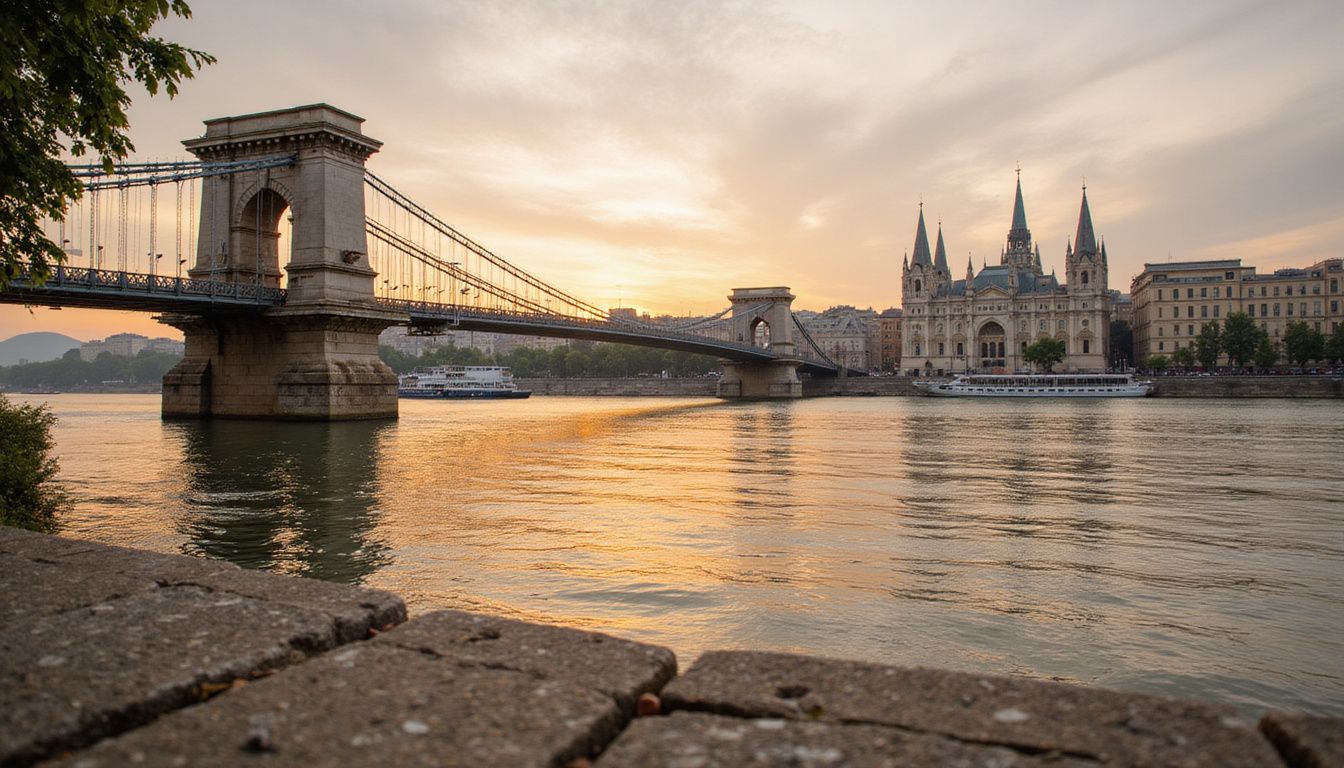
Both cities offer stunning waterfront views that will take your breath away. Budapest's Danube splits the city into two distinct sides, while Prague's Vltava River winds through the city center like a silver ribbon.
Budapest: The Danube
The Danube River flows through Budapest like a liquid highway, splitting the city into two distinct personalities. Buda sits on the west bank with its royal palace and castle district perched high above the water.
Pest sprawls across the east side, home to the magnificent Hungarian Parliament building that lights up the riverbank each evening. This mighty waterway connects Budapest to eight other countries, making it Europe's second-longest river.
The Danube is the only river in the world that flows through four capital cities, and Budapest makes the most spectacular impression of them all.
River cruises glide past stunning architecture while passengers sip Hungarian wine and watch the sunset paint the water gold. The thermal baths near the riverbank draw visitors year-round, fed by natural hot springs that have bubbled up for centuries.
Public transport bridges span the Danube at multiple points, but none match the elegance of the Chain Bridge with its stone lions standing guard. Walking along the river promenade offers Instagram-worthy shots of Fisherman's Bastion reflected in the gentle current below.
Prague: The Vltava
While Budapest's Danube flows majestically through the Hungarian capital, Prague's Vltava River creates its own magic through the Czech Republic's crown jewel. This winding waterway snakes through Prague's historic districts, offering picture-perfect views that rival any postcard.
Boat cruises glide past centuries-old buildings, giving you front-row seats to architectural wonders. Lesser Town sits gracefully along the riverbank, its baroque facades reflecting in the gentle waters below.
Prague's river views pack more punch per square mile than most European capitals. Charles Bridge spans the Vltava like a stone guardian, connecting Old Town Square to the castle district.
From the water, you'll spot St. Vitus Cathedral's spires piercing the skyline. Evening cruises transform the city into a glowing wonderland, with illuminated monuments creating a fairy-tale atmosphere that makes your camera work overtime.
Historical Districts
Both cities showcase centuries of European history through their crown jewel districts. Budapest's Castle Hill rises majestically above the Danube, housing the sprawling Buda Castle complex and the fairy-tale towers of Fisherman's Bastion, while Prague's Old Town captivates visitors with its medieval squares and the imposing Prague Castle perched on Hradčany Hill.
Budapest: Castle Hill and Buda Castle
Castle Hill rises majestically above the Danube River, offering breathtaking views that capture every visitor's heart. This UNESCO World Heritage site houses Buda Castle, a massive baroque palace complex that has watched over Budapest for centuries.
The castle's rich history attracts travelers interested in cultural heritage from around the world. Rick Steves' Europe often highlights this area as a must-see destination for good reason.
Fisherman's Bastion crowns Castle Hill with its fairy-tale towers and panoramic terraces. The neo-Gothic structure provides perfect photo opportunities overlooking the Hungarian Parliament Building.
St. Stephen's Basilica gleams in the distance across the river. Buda Castle's architecture and historical importance make it a central landmark that enhances its appeal to visitors.
The palace now serves as home to the Hungarian National Gallery and the Budapest History Museum, making your travel itinerary complete with art and culture.
Castle Hill is like a history book written in stone, where every corner tells a story of Hungary's royal past.
Prague: Old Town and Prague Castle
While Budapest showcases its royal heritage across the Danube, Prague concentrates its historical treasures in two spectacular areas. Old Town Square serves as the city's beating heart, where Gothic churches meet Baroque palaces in a stunning architectural dance.
The famous Astronomical Clock draws crowds every hour as mechanical apostles parade past its medieval face. Cobblestone streets wind between colorful buildings that have witnessed centuries of European history.
Prague Castle dominates the city skyline like a fairy tale fortress come to life. This massive complex houses St. Vitus Cathedral, royal palaces, and ancient courtyards that tell stories of Bohemian kings.
Visitors climb steep paths through Lesser Town to reach the castle grounds, where panoramic views reward their efforts. The Golden Lane offers a glimpse into medieval life with its tiny houses once home to castle guards and goldsmiths.
Famous Bridges
Both cities boast iconic bridges that steal your breath away. Budapest's Chain Bridge connects Buda and Pest across the Danube, while Prague's Charles Bridge spans the Vltava River with its famous statues and street performers.
Budapest: Chain Bridge
The Chain Bridge stands as Budapest's crown jewel, stretching majestically across the Danube River. This architectural marvel connects Buda and Pest, making it more than just a river crossing.
The bridge transforms into a golden spectacle after sunset, with warm lights illuminating its stone lions and iron chains. Photographers flock here for that perfect shot, and honestly, who can blame them? The structure dates back to 1849, making it the first permanent bridge to span the Danube in Hungary.
Walking across feels like stepping through history itself. The Chain Bridge offers stunning views of Buda Castle perched high above, while the Parliament Building dominates the Pest side skyline.
Traffic hums steadily below your feet, but the panoramic vistas steal your attention completely. This landmark contributes significantly to Budapest's appeal as a top travel destination in eastern Europe.
The bridge serves as a perfect starting point for exploring both sides of this magnificent city, leading visitors naturally toward Prague's equally impressive Charles Bridge for comparison.
Prague: Charles Bridge
Charles Bridge stands as Prague's crown jewel, stretching 1,692 feet across the Vltava River. This 14th-century stone masterpiece connects Old Town with Lesser Town through 16 Gothic arches.
Thirty baroque statues line the bridge's sides, creating an open-air art gallery that draws millions of visitors yearly. Street artists, musicians, and vendors transform the pedestrian-only bridge into a vibrant cultural hub during daylight hours.
Prague's iconic bridge offers unmatched scenic views and historical ambiance that Budapest's Chain Bridge simply cannot match. Early morning visits provide the best photo opportunities before crowds arrive.
The bridge's architectural significance stems from its role as the only river crossing for over 400 years. Tourist attractions surrounding both ends include Prague Castle, St. Nicholas Church, and the famous Astronomical Clock, making this stone crossing a perfect starting point for any city comparison between Central European capitals.
Unique Cultural Experiences
Both cities offer experiences you won't find anywhere else on Earth. Budapest invites you to soak in centuries-old thermal baths like Széchenyi Spa, while Prague captivates visitors with its towering Gothic spires and the famous Astronomical Clock that draws crowds every hour.
Budapest: Thermal Baths and Ruin Bars
Budapest transforms into a playground for relaxation and nightlife unlike anywhere else in Europe. Széchenyi Spa stands as the city's crown jewel, where locals and tourists soak in natural hot springs that bubble up from deep underground.
These thermal baths have healed bodies and souls for over a century. You can play chess while floating in mineral-rich waters or simply let the warm currents wash away your stress.
The experience feels like stepping into a living postcard.
Ruin bars flip the script on traditional nightlife completely. These venues occupy crumbling buildings that once housed shops, apartments, or warehouses. Szimpla Kert leads the pack as the original ruin bar, where mismatched furniture creates cozy corners and plants grow from old bathtubs.
Bartenders serve drinks in mason jars while live music echoes through rooms decorated with vintage bicycles hanging from ceilings. Each bar tells its own story through eclectic decorations and creative drink menus that change with the seasons.
Prague: Gothic Towers and Astronomical Clock
Prague's skyline tells stories through its Gothic spires. The city's medieval towers pierce the sky like stone needles, creating a fairytale silhouette that cameras love. St. Vitus Cathedral dominates the castle complex with its twin spires reaching 96 meters high.
The Powder Tower guards the entrance to Old Town, while Petrin Lookout Tower offers panoramic views across red-tiled rooftops.
The Astronomical Clock steals the show every hour on the hour. This 600-year-old timepiece draws crowds to Old Town Square as apostles parade through tiny windows. The clock tracks celestial movements, moon phases, and zodiac signs with medieval precision.
Street performers and vendors create a carnival atmosphere around this mechanical marvel, making it Prague's most photographed attraction after Charles Bridge.
Food and Drink Scene
Budapest serves up hearty goulash and world-class wines that warm your soul on chilly evenings. Prague counters with crispy pork knuckles, fluffy knedliky, and beer so good it flows like liquid gold through the city's veins.
Budapest: Wine and Traditional Hungarian Cuisine
Hungarian wine culture runs deep through the capital's veins. Local vineyards produce exceptional Tokaj dessert wines that have impressed European royalty for centuries. Wine bars dot every neighborhood, serving glasses of Egri Bikavér and crisp Furmint alongside hearty local dishes.
The city's wine scene offers both historic cellars and modern tasting rooms.
Traditional Hungarian food hits different than anything you'll find elsewhere in Europe. Goulash soup warms your soul on cold days, while schnitzel-style dishes satisfy hearty appetites.
Paprika seasons almost everything, giving meals a distinctive red color and smoky flavor. Street food vendors serve lángos, a fried flatbread topped with sour cream and cheese that locals consider comfort food perfection.
Prague: Beer and Czech Specialties
While Budapest charms visitors with its wine cellars and hearty Hungarian dishes, Prague takes a different approach to culinary excellence. The Czech capital stands as Europe's beer paradise, where golden lagers flow like water and local breweries craft liquid gold that puts other cities to shame.
Czech specialties fill restaurant tables across the city, from tender goulash that melts in your mouth to crispy schnitzel that satisfies any appetite. Traditional dishes like svíčková na smetaně showcase the country's love for rich, creamy sauces paired with perfectly seasoned beef.
Prague's beer culture runs deeper than most rivers, with centuries of brewing tradition that locals wear like a badge of honor. Pilsner Urquell was born here, creating the blueprint for lagers worldwide.
Czech people consume more beer per capita than any other nation, making every pub visit feel like joining a sacred ritual. Local specialties include trdelník, a sweet pastry that tourists love, and hearty potato dumplings that soak up every drop of sauce on your plate.
Nightlife and Entertainment
Budapest's ruin bars pulse with energy until dawn, while Prague's beer gardens offer a more laid-back vibe under twinkling lights. Both cities serve up completely different after-dark experiences that'll have you planning your next visit before you even leave.
Budapest: Ruin Bars and Night Cruises
Budapest transforms into a party paradise after dark, thanks to its famous ruin bars set in abandoned buildings. These bars occupy crumbling structures and forgotten courtyards, creating an atmosphere you won't find anywhere else.
Szimpla Kert leads the pack as the most popular spot, where plants grow through old bathtubs and fairy lights twinkle overhead. The city offers a vibrant nightlife scene that appeals to backpackers, couples, and party groups alike.
Locals and tourists mix freely in these spaces, sharing drinks and stories until the early morning hours.
Night cruises on the Danube River provide scenic views of Budapest's illuminated landmarks while you sip cocktails on deck. The Parliament Building glows like a golden crown, while Buda Castle sits majestically on the hill above.
Most cruises last two hours and include dinner or drinks, making them perfect for romantic evenings or special celebrations. Exploring local nightlife becomes an adventure when you combine ruin bar hopping with a peaceful river cruise, giving you the best of both worlds in one unforgettable evening.
Prague: Beer Gardens and Clubs
Prague's beer gardens buzz with locals and tourists sharing tables under chestnut trees. These outdoor spots serve fresh Czech beer straight from local breweries. You'll find massive gardens like Letná Beer Garden offering stunning city views while you sip a cold Pilsner Urquell.
The atmosphere stays relaxed during the day, perfect for afternoon drinks with friends.
After dark, Prague's club scene takes over with venues scattered across the Old Town and New Town districts. Karlovy Lazne spans five floors with different music styles on each level.
Cross Club features an industrial design with metal sculptures and electronic beats. Most clubs stay open until 6 AM, giving you plenty of time to dance the night away. Getting around between venues becomes easy with Prague's efficient transportation system.
Transportation
Getting around these two cities feels like comparing apples to oranges. Budapest's metro system runs like clockwork, while Prague's cobblestone streets practically beg you to walk everywhere and soak up the medieval charm.
Budapest: Efficient Metro and Tram System
Budapest's metro system cuts through the city like a well-oiled machine. Four color-coded lines connect every major attraction, from St. Stephen's Basilica to Fisherman's Bastion. The M1 yellow line holds special charm as Europe's second-oldest underground railway.
Trains arrive every 2-3 minutes during peak hours. You'll reach Castle Hill or the thermal baths without breaking a sweat.
Trams glide above ground with equal precision. The iconic yellow streetcars snake along the Danube riverbank, offering stunning views while you travel. Line 2 provides front-row seats to Budapest's architectural gems.
Prague's transportation feels more scattered by comparison. Budapest's integrated ticketing system works across all modes, making transfers seamless. This efficiency gives Budapest a clear edge for travelers who value convenience and accessibility in their transportation choices.
Prague: Walkability and Historic Trams
Prague makes exploring on foot a breeze. The city center packs most major attractions into a compact area. You can walk from Old Town Square to Prague Castle in about 20 minutes. Cobblestone streets wind through medieval neighborhoods, creating picture-perfect routes for travelers who love to wander.
The flat terrain around the Vltava River keeps walking comfortable, even for those who prefer leisurely strolls.
Prague's historic trams add charm to your daily travel routine. These vintage streetcars have rolled through the city since 1891, making them a living piece of transportation history.
Line 22 takes you past stunning viewpoints and major landmarks without breaking your travel budget. The tram system connects seamlessly with walking routes, so you can hop on when your feet need a rest.
Many travelers find the historic trams more enjoyable than standard buses or metros found in other European capitals.
Accommodation Options: Hotels vs. Airbnb
Choosing between hotels and Airbnb can make or break your Budapest or Prague adventure. Both cities offer fantastic lodging options, but smart travelers dig deeper before booking their perfect stay.
Airbnb vs Hotels for Security: Pros & Cons for Travelers
Hotels typically offer better security than Airbnb rentals. Professional staff monitor entrances 24/7. Security cameras cover common areas. Key card systems track who enters and exits.
Front desk agents verify guest identities. This creates multiple layers of protection for travelers.
Airbnb properties vary wildly in security features. Some hosts install smart locks and cameras. Others provide basic keys with minimal protection. You might stay in a ground-floor apartment with easy access for intruders.
Or you could book a high-rise unit with doorman service. The security level depends entirely on your host's investment and location choices.
Airbnb vs Hotel: Pros and Cons – The Ultimate Comparison
Airbnb rentals offer more space and kitchen facilities, making them perfect for longer stays in Budapest or Prague. You can cook your own meals and live like a local. However, you might face inconsistent quality and limited customer service.
Some hosts cancel last minute, leaving you scrambling for backup plans.
Traditional accommodations provide reliable service, daily housekeeping, and 24/7 front desk support. You get consistent quality standards and professional staff to help with travel recommendations.
The downside? Higher costs per night and less authentic local experiences. Most rooms lack kitchen space, forcing you to eat out for every meal.
Unveiling the Reality Behind 4.8-Star Airbnb Listings
High-rated vacation rentals often hide problems behind perfect photos and glowing reviews. Professional photographers make tiny spaces look spacious. They use wide-angle lenses and perfect lighting.
Hosts cherry-pick the best reviews while burying negative feedback deep in the comments. Many properties receive inflated ratings from friends and family members who never actually stayed there.
Smart travelers dig deeper than star ratings before booking. Check recent reviews for red flags like cleanliness issues or misleading photos. Look for specific details about the neighborhood, noise levels, and actual amenities.
Cross-reference the listing photos with recent guest pictures in reviews. Properties in popular destinations like Budapest or Prague often use stock photos that don't match reality.
Trust your gut if something feels too good to be true.
Why Some Airbnb Listings Mislead Guests: Listing vs. Reality
Airbnb photos often show the best angles while hiding major flaws. Hosts snap pictures during perfect lighting conditions and skip shots of cramped bathrooms or noisy street views.
BookYolo's AI-powered inspection engine analyzes stays and vacation rentals to reveal these overlooked quality signals in listings and reviews. The platform interprets guest feedback to uncover patterns and inconsistencies that travelers miss during booking.
Misleading descriptions create false expectations about location and amenities. A "cozy studio" might actually be a converted basement, while "near downtown" could mean a 45-minute commute.
BookYolo covers major online travel agencies and provides comprehensive understanding of accommodations to prevent unexpected issues during stays. Smart travelers now use inspection tools to foster clarity and confidence before booking their Prague or Budapest adventure.
Now let's explore how hotels stack up against vacation rentals for your Eastern European getaway.
10 Airbnb Red Flags Every Traveler Should Know Before Booking
Spotting red flags before booking your vacation rental can save you from a nightmare trip. Photos that look too perfect often hide major problems. Hosts who respond slowly or avoid direct questions about the property raise serious concerns.
Missing reviews or only recent five-star ratings should make you pause. Properties with vague descriptions or no mention of important details like WiFi or parking create trouble later.
Smart travelers check for these warning signs before clicking "book now." Listings that demand immediate payment or refuse refunds signal potential scams. Locations marked incorrectly on maps can leave you stranded far from attractions.
Hosts who won't provide exact addresses until after payment often have something to hide. Reviews mentioning cleanliness issues, broken amenities, or surprise fees tell the real story.
Taking time to research saves money and stress during your vacation.
The Hidden Cost of Cheap Hotels: Why You Always Pay Later
That rock-bottom hotel price might look tempting, but cheap rooms often come with hidden surprises that hit your wallet later. Poor Wi-Fi forces you to buy expensive data plans. Broken air conditioning means sweltering nights or costly room upgrades.
Missing amenities like towels, toiletries, or even basic cleaning supplies send you scrambling to nearby stores at inflated tourist prices.
Smart travelers know that bargain hotels frequently skimp on essentials to keep advertised rates low. You'll pay extra fees for everything from parking to luggage storage. The thin walls and noisy locations often ruin your sleep, leaving you exhausted and needing expensive coffee or energy drinks just to function.
Quality hotels in Budapest or Prague might cost more upfront, but they save you money and stress in the long run.
How to Avoid Bad Hotel Picks When Traveling
Bad hotel picks can ruin your entire trip, whether you're exploring Krakow's historic streets or visiting St. Stephen's Basilica in Budapest. BookYolo's AI-powered inspection engine helps travelers analyze hotels and vacation rentals by highlighting quality signals in reviews that guests often overlook.
The platform interprets listings and guest feedback to uncover hidden patterns, inconsistencies, and risks across all major online travel agencies. This free service gives you a comprehensive view of accommodations, allowing you to book with clarity and confidence.
Hotel photos deceive travelers more often than you'd think, especially in popular destinations like Poland or the USA. BookYolo enhances the booking experience by revealing what lies beneath glossy marketing images and polished descriptions.
The platform's premium plan serves frequent travelers who need deeper insights into accommodation quality. Smart travelers check multiple sources before booking, but BookYolo streamlines this process by analyzing data from various booking platforms in one place.
Why You Trust Hotel Photos Too Much When Booking a Stay
Hotel photos work like magic tricks. They show rooms bathed in perfect lighting with wide-angle lenses that make tiny spaces look massive. Professional photographers capture the best angles while hiding flaws behind clever cropping.
Your brain falls for these visual tricks because it wants to believe the dream vacation is real.
Smart travelers dig deeper than glossy images. Read recent guest reviews that mention room size and cleanliness. Check multiple booking sites for different photos of the same property.
Look for images that show the bathroom, closet space, and view from the window. Photos rarely show the construction noise next door or the cramped elevator that breaks down twice a week.
How Listing Descriptions Deceive Your Brain: The Psychology of Cognitive Bias
Your brain falls for clever tricks every time you read hotel or Airbnb descriptions. Marketing teams know exactly which words make properties sound amazing, even if reality tells a different story.
They use psychological triggers that bypass your logical thinking. Words like "cozy" might mean cramped, while "rustic" could translate to outdated. Your mind fills in gaps with positive assumptions.
This happens because confirmation bias makes you focus on details that match what you want to believe.
Cognitive biases work against smart travelers in sneaky ways. Anchoring bias hits first when you see that initial price or star rating. Everything else gets compared to that first impression.
Availability heuristic tricks you into thinking recent reviews matter more than older patterns. Social proof bias makes you trust other guests' opinions without questioning their standards.
Photos trigger the halo effect, making you assume one beautiful room represents the entire property. Your brain processes these marketing messages faster than you can fact-check them, leading to booking decisions you might regret later.
FAQs
1. Which city has better views, Budapest or Prague?
Budapest takes the crown here. Fisherman's Bastion offers breathtaking panoramic views of the Danube River and the city below. Prague has pretty sights too, but Budapest's elevated viewpoints are simply spectacular.
2. What's the most impressive church to visit in these cities?
St. Stephen's Basilica in Budapest is absolutely stunning. The dome climb rewards you with incredible city views, and the interior will leave you speechless.
3. Can I take day trips from either city to mountain destinations?
From Prague, you can easily reach Zakopane in Poland for mountain adventures. It's a bit of a journey, but the Tatra Mountains are worth every mile.
4. Which city offers better bang for your buck?
Budapest wins this battle hands down. Your dollar stretches further there, from hearty meals to cozy accommodations. Prague costs more these days, especially in tourist hotspots.
Back
